
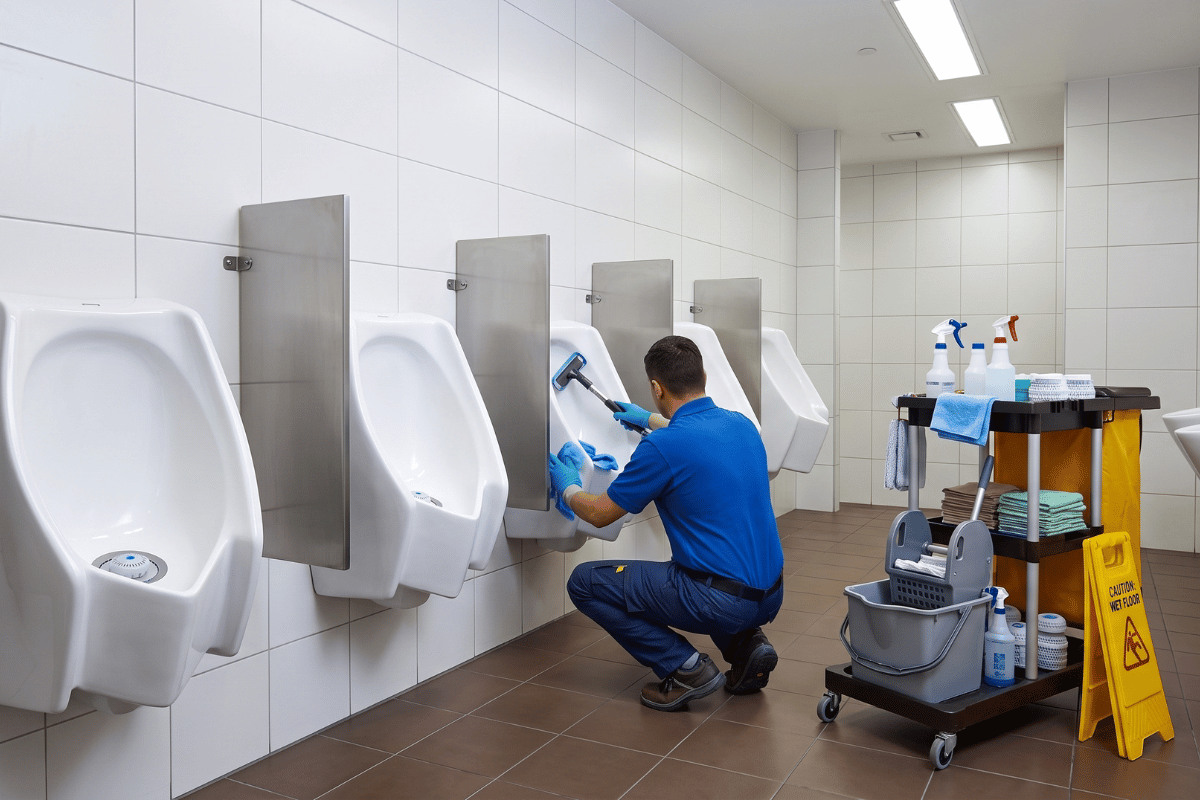
Waterless urinals are designed to be low-maintenance, but low-maintenance is not the same as no-maintenance. The daily and weekly basics, such as cleaning with approved products, checking the seal, and replacing inserts on schedule, are well documented and straightforward. What gets less attention is how seasonal changes affect system performance and what adjustments facility teams should make throughout the year to stay ahead of problems.
Temperature shifts, humidity swings, changes in building occupancy, and even HVAC cycling all influence how waterless urinals behave. A maintenance routine that accounts for these seasonal factors keeps odors controlled, drains clear, and service costs predictable year-round.
Spring: Reset and Prepare for Higher Traffic
Spring is the ideal time for a system-wide reset, especially in facilities that experience lighter use during the winter months.
- Inspect and replace inserts as needed. If inserts were not changed over the winter, spring is the time. Oil-barrier inserts that have been sitting with lower traffic may have degraded sealing liquid or accumulated sediment. Start the season with fresh inserts to establish a clean baseline.
- Flush the drain lines. Remove each insert and run a small volume of warm water with a mild, non-caustic cleaner through the drain to clear any buildup that accumulated during the colder months. Verify that flow is steady and unobstructed before reseating the insert.
- Deep clean the surrounding area. Winter conditions often lead to less thorough floor and grout cleaning. Urine residue in the floor and grout around the base of the fixture is one of the most common sources of restroom odor, and spring is the right time to address it. Use an enzyme-based floor cleaner to break down uric acid crystals and restore the area.
- Review your supply inventory. Confirm that you have sufficient odor barrier insert kits, EnviroSeal replacement kits, barrier oil, approved cleaners, and insert tools on hand to cover the higher-traffic months ahead.
Summer: Manage Heat, Humidity, and Peak Usage
Summer typically brings the highest restroom traffic in schools (summer programs and events), stadiums, airports, hotels, and tourist-facing businesses. It also brings heat and humidity, both of which influence odor behavior.
- Increase cleaning frequency. Higher temperatures accelerate bacterial growth on surfaces and in the area around the fixture. In high-traffic facilities, consider moving from once-daily to twice-daily wipe-downs during peak summer months. Continue using non-abrasive, non-chlorine cleaners applied with a soft cloth.
- Monitor oil barrier levels more closely. In liquid-barrier systems, increased use means the sealing liquid depletes faster. Check barrier levels at least weekly during summer and top off as needed. Higher restroom temperatures can also cause slight changes in oil viscosity, so watch for any reduction in seal effectiveness.
- Watch for increased condensation. In humid climates, condensation can form on restroom surfaces, including on and around the urinal. Moisture on the floor near the fixture can mix with trace amounts of urine and create odor even when the fixture itself is performing properly. Keeping the surrounding area dry is just as important as maintaining the insert.
- Track insert change intervals against actual traffic. Summer usage patterns may not match the rest of the year. If your facility sees a significant spike in visitors or occupants during summer, adjust your replacement schedule accordingly rather than relying on the calendar-based cadence that works during quieter months.
Fall: Transition and Calibrate
Fall is a recalibration period. Traffic patterns shift as schools resume full schedules, offices return to steady occupancy, and seasonal tourism tapers off. It is also the last comfortable window for hands-on maintenance before winter.
- Perform a quarterly line check. With inserts removed, inspect the drain line for signs of sediment buildup or slow flow. If drainage is sluggish, schedule a mechanical cleaning (snake or hydro-jet) before winter, when scheduling service becomes more difficult and facility downtime is less convenient.
- Replace inserts proactively. If an insert is approaching its rated use limit heading into winter, replace it now rather than waiting. Starting the colder months with a fresh insert reduces the risk of an unexpected odor issue or seal failure during a period when maintenance resources may be stretched.
- Refresh staff training. Fall is a natural time for training resets, particularly if custodial teams have rotated over the summer. A brief refresher on proper cleaning technique (spray and wipe, no bucket flushes), seal inspection procedures, and the correct insert change-out process prevents the most common maintenance mistakes.
- Reassess your system type. If your facility has been using oil-barrier inserts and finding the replacement frequency burdensome, fall is a practical time to evaluate whether switching to the Purleve EnviroSeal mechanical insert makes sense. The EnviroSeal is rated for up to approximately 45,000 uses, significantly extending the interval between change-outs compared to the roughly 15,000-use rating on standard oil-barrier inserts.
Winter: Protect and Maintain Through Low Activity
Winter presents a different set of challenges, particularly for facilities that see reduced occupancy or extended closures over holidays.
- Do not neglect fixtures during low-traffic periods. Even when a restroom sees minimal use, the seal inside a waterless urinal can dry out or degrade if left unattended for extended periods. Check barrier levels and insert condition at least biweekly during winter, even in low-traffic restrooms.
- Maintain building temperature in restroom areas. If HVAC systems are set back during holidays or off-hours, restroom temperatures can drop significantly. While waterless urinals do not have water lines that could freeze, extremely cold temperatures can affect the viscosity and performance of liquid odor barriers. Keeping restroom areas at a reasonable temperature protects both the fixture and the sealing system.
- Address dry air and static odor conditions. Winter air tends to be drier, and lower humidity can reduce the natural suppression of airborne odor molecules. If occupants report increased odor during winter months despite proper insert condition, the environment may be the factor rather than the fixture. Ensuring adequate ventilation and maintaining consistent cleaning routines typically resolves the issue.
- Plan ahead for spring. Use the quieter winter months to review the full year’s maintenance logs, assess insert consumption rates, identify any recurring problem fixtures, and place orders for supplies needed in the spring.
Year-Round Fundamentals
Seasonal adjustments work best when layered on top of a consistent baseline routine. Regardless of the time of year, the fundamentals remain the same: clean daily with approved, non-abrasive products; confirm the seal weekly; address floor and grout regularly; and never pour harsh chemicals, bleach, or large volumes of water down the fixture. These habits prevent the vast majority of odor and drainage issues before they start. For a detailed breakdown of daily, weekly, and monthly routines, see our complete maintenance checklist for waterless urinal systems.
For facilities using Purleve ZeroFlush systems, Aqua Pro Solutions carries the full range of replacement inserts, odor barrier kits, EnviroSeal drain inserts, and barrier oil to keep your fixtures performing through every season. Browse the full ZeroFlush product line here or call (828) 255-0772 for guidance on the right maintenance setup for your facility.